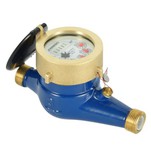
With the development of smart water management, piped drinking water systems, due to their pure water quality and precise metering, are gradually becoming standard equipment in residential, school, and commercial buildings. As the core metering device of the system, remote-transmitted water meters, with their technological advantages and management efficiency, have become a key tool for water supply management. Below, we will analyze the application value of remote-transmitted smart water meters in piped drinking water scenarios from four dimensions: technical characteristics, functional innovation, selection techniques, and usage specifications.
I. Technical Characteristics of Remote-Transmitted Water Meters
1. High-Precision Metering Capability Because drinking water is expensive and consumed in small quantities, ordinary water meters, which measure in "tons," have significant errors. Remote-transmitted water meters use ultrasonic or electromagnetic sensing technology, capable of detecting flow velocities as low as 0.005 m/s, achieving drip metering (e.g., the CTCS series ultrasonic water meter has a starting flow rate as low as 0.002 m³/h), with an error controlled within ±0.5%~1%, far exceeding the ±2% accuracy of traditional mechanical water meters.
2. Environmental Adaptability
Addressing the specific requirements of direct drinking water systems, the remote-reading water meter features a fully sealed design with an IP68 waterproof and moisture-proof rating, adaptable to various installation environments such as water meter wells and indoor spaces. Its operating temperature range is extended to 0~50℃, with some models supporting metering of high-temperature liquids (e.g., 160℃), meeting the high standards required for direct drinking water pipelines.
3. Low Energy Consumption and Long Lifespan
Powered by a low-power lithium battery, it offers a battery life of 6~10 years, reducing maintenance frequency. The ultrasonic water meter has no mechanical rotating parts, resulting in extremely low wear and a lifespan of over 10 years, significantly reducing replacement costs.
II. Functional Innovation and Intelligent Management
1. Real-time Monitoring and Anomaly Warning
Through IoT technologies such as NB-IoT and LoRa, water meter data can be uploaded to the management platform in real time. If continuous water usage for half an hour is detected, a leak alarm is triggered; abnormal flow at night indicates pipe damage, enabling "early detection and early handling."
2. User Self-Service
Supports remote recharge methods such as WeChat and Bluetooth, allowing users to purchase water 24 hours a day. The management system can set tiered water pricing and minimum consumption policies, and optimize the charging model by combining water usage data analysis to improve operational revenue.
3. Public Welfare and Energy Conservation: By monitoring the water usage patterns of elderly people living alone, the platform can identify abnormal situations (such as prolonged periods without water usage records) and automatically issue warnings, ensuring the safety of this vulnerable group. Furthermore, the pressure-loss-free design reduces water pump energy consumption.
III. Selection Tips: Matching Scenario Needs
1. Select Type Based on Metering Needs
Low-flow scenarios (e.g., households): Prioritize ultrasonic water meters, with a range ratio of up to 200:1, covering the entire range from dripping to high flow.
High-management-efficiency scenarios (e.g., schools): Use IC card or IoT water meters, paired with self-service recharge machines and cloud management software to reduce labor costs.
2. Parameter Adaptation
Diameter Selection: Use meters with commonly used flow rates close to the Q2~Q3 range of the water meter as a guideline, avoiding simply matching the pipe diameter. For example, in a commercial or residential building with pre-buried 100mm pipes, if the actual flow rate is low, a DN80 meter should be selected to improve accuracy in low-flow areas.
Material and Protection: For direct drinking water pipes, food-grade stainless steel or copper alloy meter bodies are recommended to avoid secondary contamination.
IV. Installation and Usage Precautions
1. Standard Installation Procedure
Location Selection: Install horizontally in a location easily accessible for meter reading, protected from light and freezing. Leave a straight pipe section 10 times the pipe diameter before the meter and 5 times the pipe diameter after the meter to ensure stable water flow.
Direction Calibration: The arrow on the meter casing must be aligned with the water flow direction. After installation, thoroughly flush the pipes to prevent hemp fibers and sediment from clogging the filter.
2. Key Points for Operation and Maintenance
Freezing Prevention Measures: In winter, close valves on unused water meters and install insulation on exposed pipes to prevent freezing and cracking.
Regular Maintenance: Conduct technical inspections every 2 years and clean impurities from the filter. If the electronic display and mechanical digits do not match, the mechanical digits should be used.
Battery Replacement: After battery replacement, tighten the moisture-proof cover to prevent the circuit board from becoming damp and malfunctioning.
Remote Smart Water Meters, through technological innovation and data empowerment, are reshaping the efficiency and experience of direct drinking water management. From high-precision metering to intelligent operation and maintenance, water meters have transcended their traditional tool attributes, becoming a core node in the refined management of water resources. In the future, with the integration of 5G and AI technologies, water meters may be further upgraded to become the "nerve endings" of urban water affairs, promoting the comprehensive realization of a water-saving society.