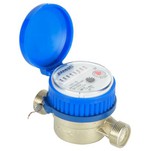
Water meters are modern metering instruments. Although their function is simple, they are indispensable tools in both industrial production and daily life. Among the wide variety of water meters available, remote-reading water meters have garnered significant interest-particularly regarding their metering accuracy. Indeed, accuracy is a critical metric for any water meter, as it directly determines the amount of water charges incurred. In reality, thanks to modern manufacturing technologies, the inherent accuracy of water meters is quite high; however, beyond the quality of the water meter itself, numerous other factors can also influence its precision.
First, water quality affects the accuracy of remote-reading water meters. If the water quality is poor, the water may contain various impurities and particulate matter. These contaminants can compromise the meter's measurement precision and may even lead to meter malfunctions.
To ensure the accuracy of a water meter, it is essential to maintain the purity of the water supply. In regions with poor water quality, water treatment equipment can be employed to remove impurities and particulates, thereby improving water cleanliness.
Second, the installation and operational usage of remote-reading water meters are also factors that influence their accuracy. During installation, care must be taken to ensure that the connection between the meter and the pipeline is secure, that the meter is positioned horizontally, and that the meter's nominal diameter matches that of the pipeline.
Furthermore, during operation, one must monitor whether the water meter is subjected to external forces-such as pipeline vibrations. If a water meter is exposed to such external forces, its measurement accuracy will be compromised. To guarantee the meter's precision, close attention must be paid to these specific details during both installation and operation to prevent any unnecessary adverse effects on the device.
Third, the cleaning and maintenance of water meters also play a role in their accuracy. If a water meter goes without cleaning and maintenance for an extended period, issues such as blockages and scale accumulation may arise; these problems will inevitably impair the meter's measurement precision.
Regular cleaning and maintenance of remote-reading water meters not only ensure measurement accuracy but also extend the service life of the device. During cleaning and maintenance, it is imperative to avoid using corrosive substances-such as strong acids or alkalis-to prevent damage to the water meter.
Additionally, temperature and pressure are other factors that influence water meter accuracy. Under conditions where water temperature and pressure fluctuate or remain unstable, the meter's measurement precision may deviate. Therefore, in environments frequently characterized by unstable water temperature and pressure, the installation of temperature and pressure control equipment is essential to ensure stability. By maintaining consistent temperature and pressure levels, the metering accuracy of the water meter can be effectively guaranteed.
The accuracy of a remote-reading water meter is a critical performance indicator, influenced by a multitude of factors. To safeguard this accuracy, due attention must be paid during daily operations to factors such as water quality, proper installation and usage, cleaning and maintenance, as well as temperature and pressure conditions. By strictly adhering to detailed operational protocols, the objective of ensuring the water meter's accuracy can be successfully achieved. Only by establishing a foundation of guaranteed water meter accuracy can water be utilized more effectively, thereby ensuring the efficient and sustainable use of water resources.