There is no water meter in the field, and there is no water in the flood. It is a major cause of wasting water in agriculture. Today, this regulatory gap is gradually being added. Recently, it was learned from the Municipal Agriculture Bureau that in 2015, smart water monitoring equipment will be promoted and installed in the suburbs of Beijing, and water red lines will be allocated for Daejeon and greenhouses, water conservation will be rewarded, and excessive fees will be charged to block large holes in the field.
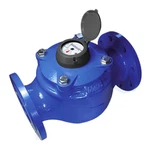
Water is a highly cherished resource in the city. Agriculture has always been a major concern for water users. Previously, some villages had already installed water meters, but most of them installed a water meter in the contiguous farmland, and even shared a water meter in the village. "It's too extensive. Once the waste occurs, it is not a law, and there is no way to restrict it." The relevant person in charge of the Municipal Agriculture Bureau said that the intelligent remote wireless transmission water meter installed this time is different, and it is set one by one in the field. The water consumption in the field is monitored to the exact amount of mu, and the greenhouse water consumption is accurate to the shed.
In Longyang Village, Gubeikou Town, Miyun County, which was the first to install such a smart water meter, the phenomenon of dripping and leaking in the past has disappeared. “There was originally thought that there was water, no one was in charge, and no one was distressed.” Dong Guocai, a farmer, said that it is different now. Every household has a water meter installed in it. Whoever has more water, how much is more, can be transferred to the city at that time. in.
The water meter of the farmers in Longyang Village is connected to the municipal water statistics analysis software platform located at the Municipal Agricultural Technology Extension Station. Through this platform, real-time remote transmission and summary analysis of water can be realized.
In 2015, there will be an increase of 300 smart water monitoring points like Longyang Village. By installing a wireless remote transmission water meter and using GPRS technology, real-time remote transmission of irrigation water consumption can be realized, and the water use in rural areas can be used for real-time and accurate water metering.
At the same time of installing the smart water meter, the red line of rural water in the city is also drawn out: greenhouses and other facilities agriculture, the annual water consumption per mu is not more than 500 cubic meters, and the annual crop water per mu is no more than 200 cubic meters per acre. Water does not exceed 100 cubic meters per year.
Within this amount, the savings will be given appropriate rewards, and the excess will be charged according to the regulations. How to collect the law? The comprehensive reform of the agricultural water price in the city is now being piloted in several agricultural parks in Fangshan and Tongzhou, and will soon be introduced.
At the same time, relying on smart water meters to tighten the water pipes that run the leaks, the Municipal Agricultural Bureau is entrusting China Agricultural University to carry out research on the status of agricultural water saving in the city, and formulating the "Beijing Agricultural System Water Saving Plan (2015-2020)" to find out the city. The status quo of agricultural water resources, zoning and sub-industries (crops), from 2015 to 2020, the city's agricultural water-saving mode, technical measures and policy recommendations based on agronomic water-saving technologies.
In 2014, the city's agricultural water saving was 40 million cubic meters. In 2015, through various agricultural water saving measures, it is expected to save 40 million cubic meters of water on the basis of 2014.