The Internet of Things/Internet and the two people are related to many things, which means that goods are connected to the Internet through wireless sensor information sensing devices to realize the processing of information data acquisition sensors.
With the advancement and development of science and technology, the gradual maturity of Internet of Things technology is increasingly applied in the fields of industry, medical care, and horticulture. In recent years, smart water meters have developed rapidly, and the production of smart water meters has reached 10,000 units, a year-on-year increase. Due to regional differences in the north and southern and southern China, the main owners of remote water meters, and the northern part are mainly smart card prepaid water meters.

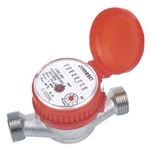
Water meter networking is a new type of smart water meter. Compared with the traditional remote water meter and smart water meter, it has the advantages of good real-time performance, convenient installation, convenient data collection and analysis. In the old mode of the traditional water meter, according to the transmitted data line, it is necessary to have a common handset, repeater and hub. A small part of the problems in the installation process will cause a series of problems, resulting in post-maintenance requirements. Increase the cost of water meters. In the design and installation of the IoT water meter, there is no need for on-site operation such as drilling and wiring. Only the meter can be installed in the pipeline. All data information is collected, processed and debugged through the Internet of Things technology at the computer terminal.
Internet of Things Water Meter System
The overall design of the new IoT water meter is mainly composed of the design framework of the built-in wireless sensor. The wireless transmission module, the remote monitoring system (structure) and the enterprise database are composed of four parts. The collection of on-site information data is completed by wireless sensors, and each component module cooperates to complete the collection, transmission and analysis of the resident water meter data. The instrument can be remotely controlled, connected directly to the cloud from the water meter, and controls the user's water meter to the meter, thus in the traditional mode
The sensing layer of the water meter system holds the water meter, the internal temperature sensor and the flow sensor collect the real-time temperature through the routing node sensor and the information between the resident data nodes of the water is the topology of the network, so you can choose the best path to The transmission of data and the combination of technology will realize the wireless communication between the sensor node and the aggregation node and the aggregation node; the single-chip computer controls the data acquisition and transmission to the communication module through the application layer and the second data terminal.
When each sensor node of the sensor layer completes the collection of information, the data is transferred to the application layer, the presentation layer, the application layer, and the presentation layer to display and receive information remote real-time remote monitoring system (structure). /The architecture is based on the wide area network, facing different user groups, the design range is very wide, and the use of water meters is also very wide and scattered.
Compared to the architecture, the /structured interface can be used by the browser, simplifying the development, maintenance, and use of the system. The network layer between the sensing layer and the application layer, the main function is that when the sensing layer of the sensor node collects the data, the data is sent to the first mobile wireless transmission module, and the data stored in the database is transmitted through the network, and then transmitted to The remote monitoring center transmits data from the sensing layer application layer or layer.